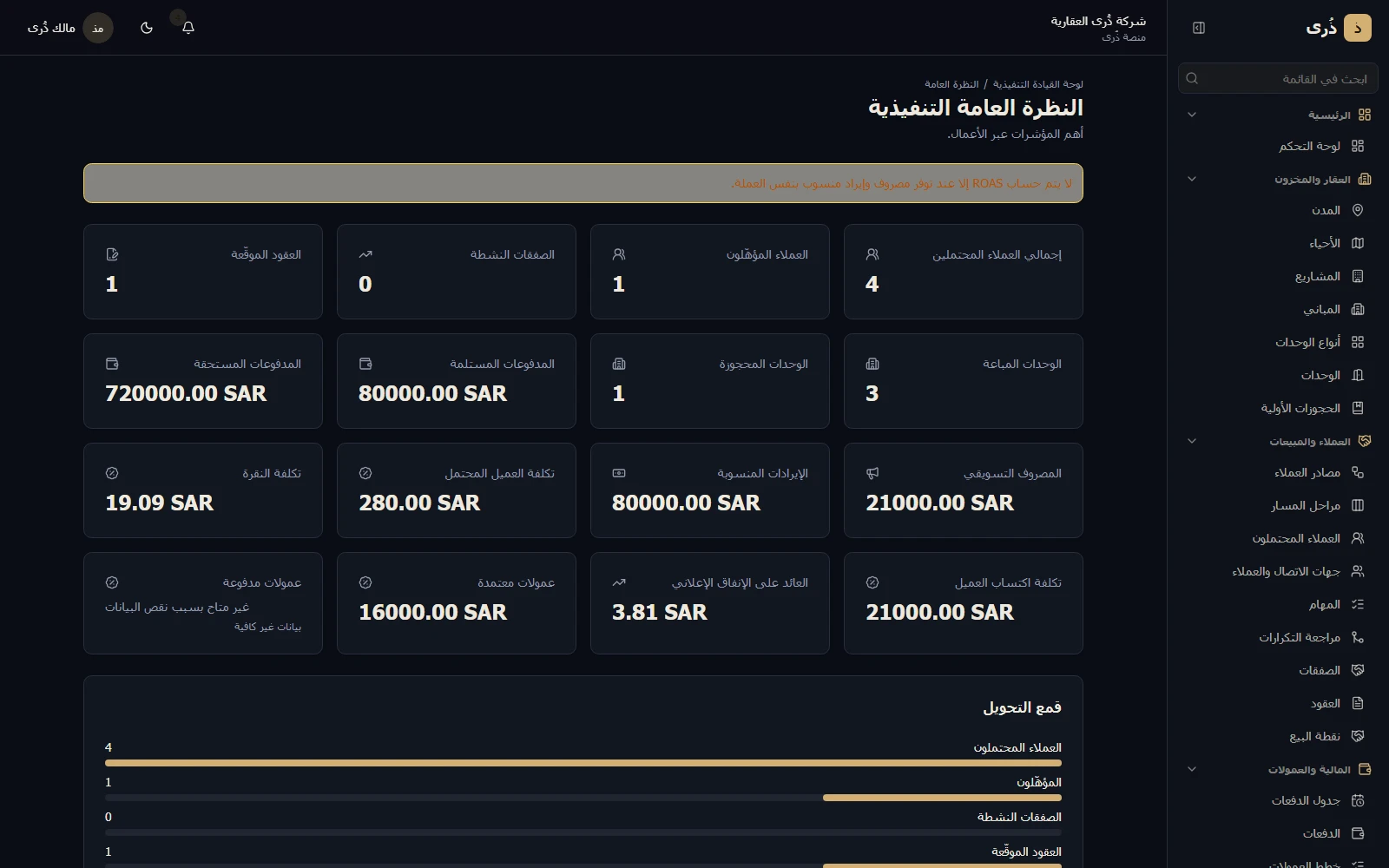

Case study · Multi-tenant real-estate SaaS
ذُرىDhura
Engineering project
An Arabic-first real-estate platform where every module is scoped by tenant, and AI can recommend anything but changes nothing without a person.
- Role
- Sole author: architecture, backend and frontend
- Domain
- Real-estate CRM, sales, finance and customer portal
- Shape
- Around thirty FastAPI modules, one PostgreSQL schema
- Status
- V1 release candidate, not deployed
The business journey
The modules follow one customer from first contact to paid installments.
Step 01
Lead
Captured and assigned in the CRM.
Step 02
Unit
Matched against live inventory.
Step 03
Reservation
Held while the deal is agreed.
Step 04
Contract
Terms, parties and schedule.
Step 05
Payments
Installments posted to finance.
Step 06
Portal
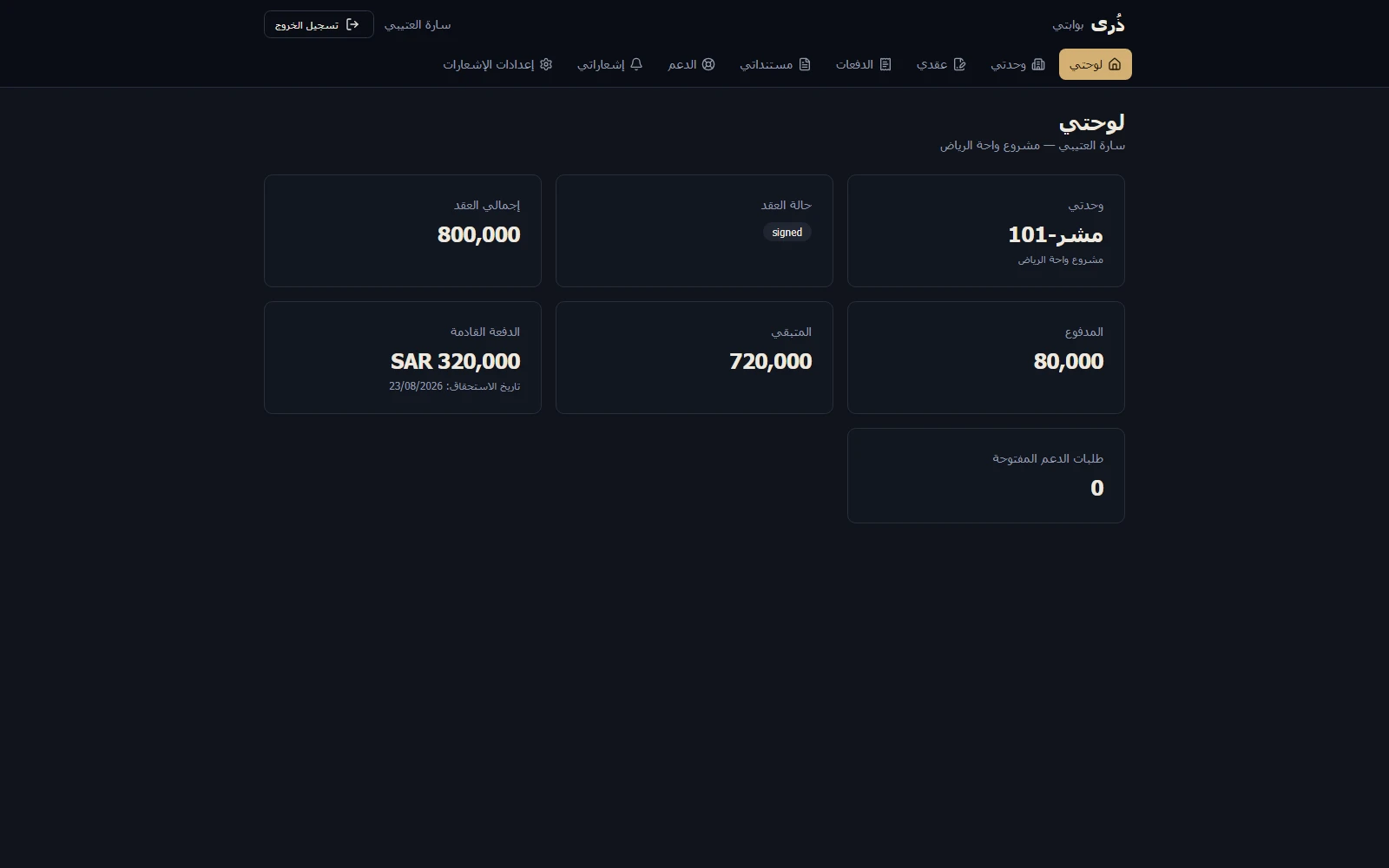
The customer follows it all.
How the AI layer is held back
- 01
Deterministic agents
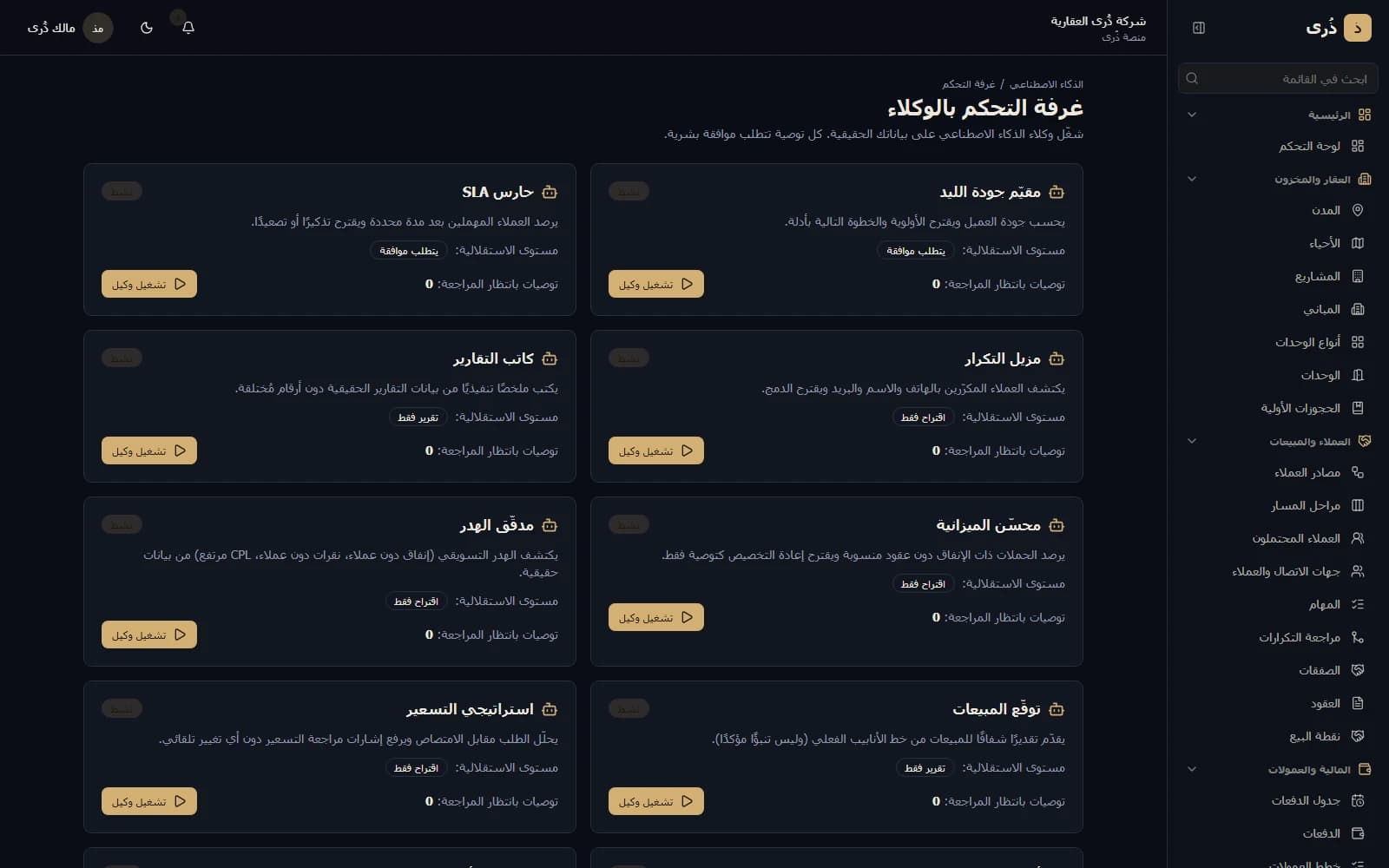
Agents follow fixed logic. They are not autonomous loops, and the page does not call them that.
- 02
Read-only, allowlisted tools
Each agent may call only the tools on its allowlist, scoped to the tenant, and none of them write.
- 03
Approval, then a use case
An agent emits an action. A person approves it, and apply_action runs it through the same domain use case the UI calls.
Engineering decisions
- 01
Tenant scoping everywhere
tenant_id is carried through models, repositories and queries across the codebase, not added in one middleware.
tenant_id
- 02
A provider-neutral AI gateway
Model calls go through one gateway, and output is validated against a schema before anything reads it.
- 03
Migrations as history
Schema changes live in Alembic revisions, so the database can be rebuilt from scratch.
alembic upgrade head
- 04
Domain modules, not layers
Each business area owns its domain, application and infrastructure code.
Real screens
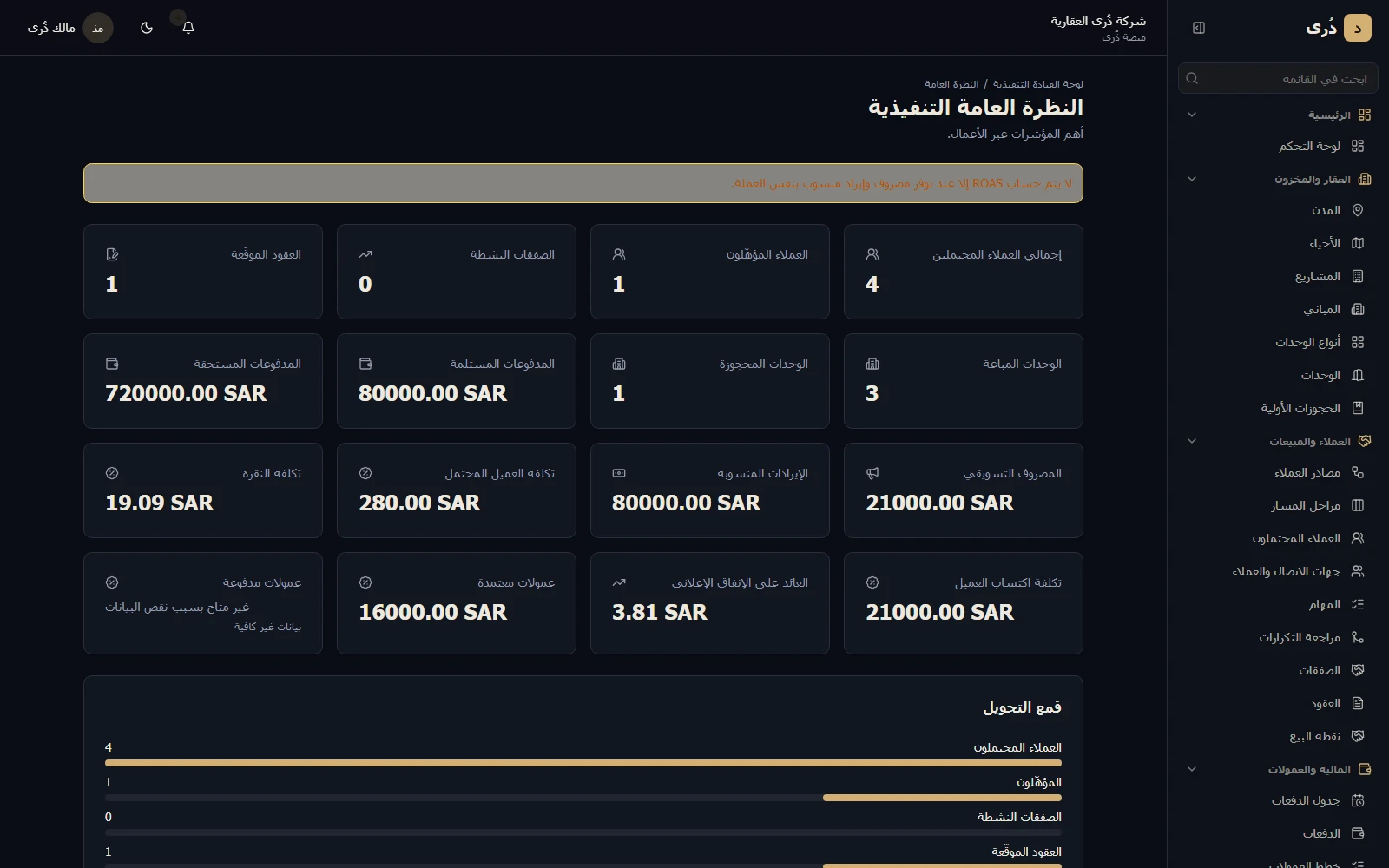
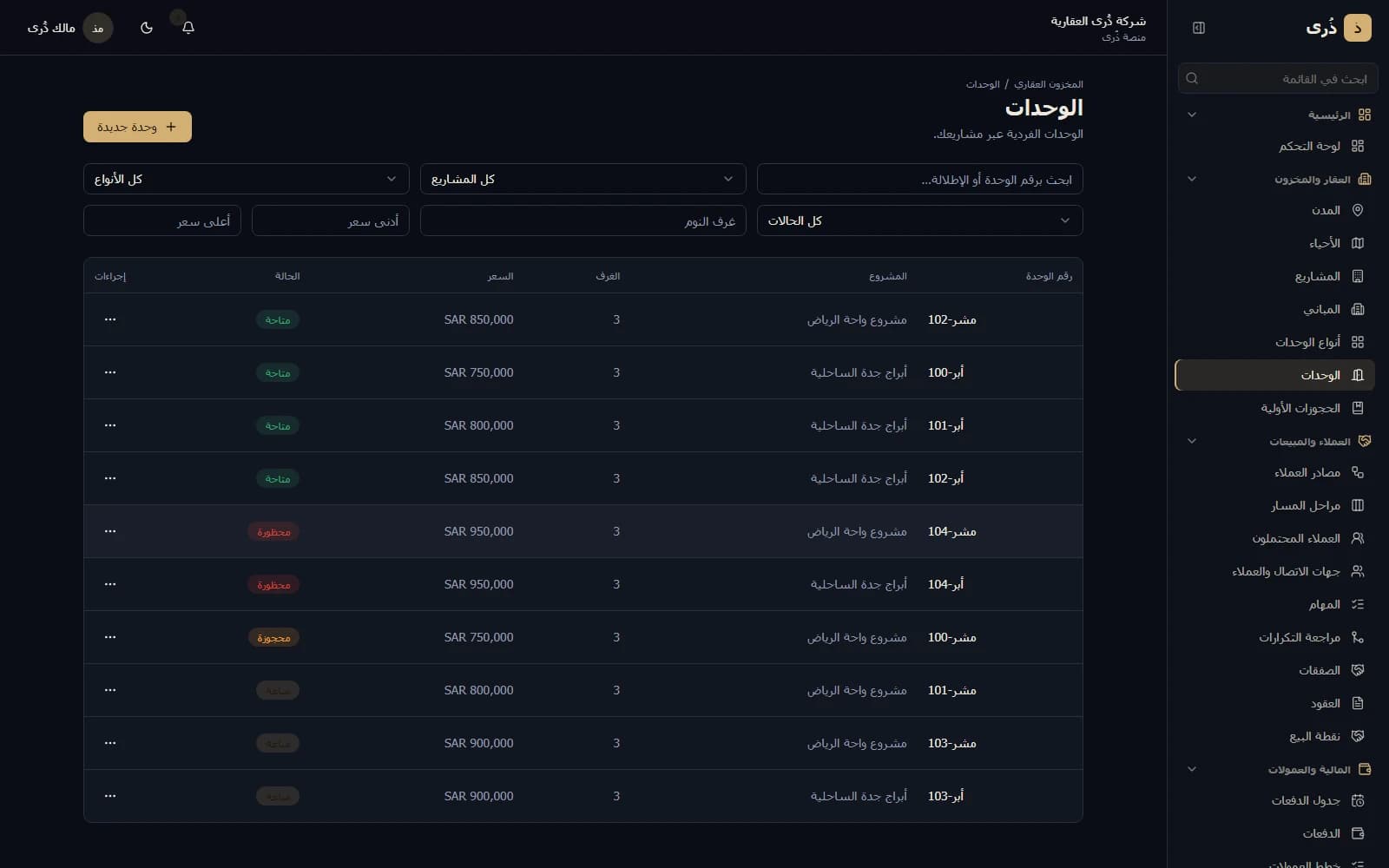
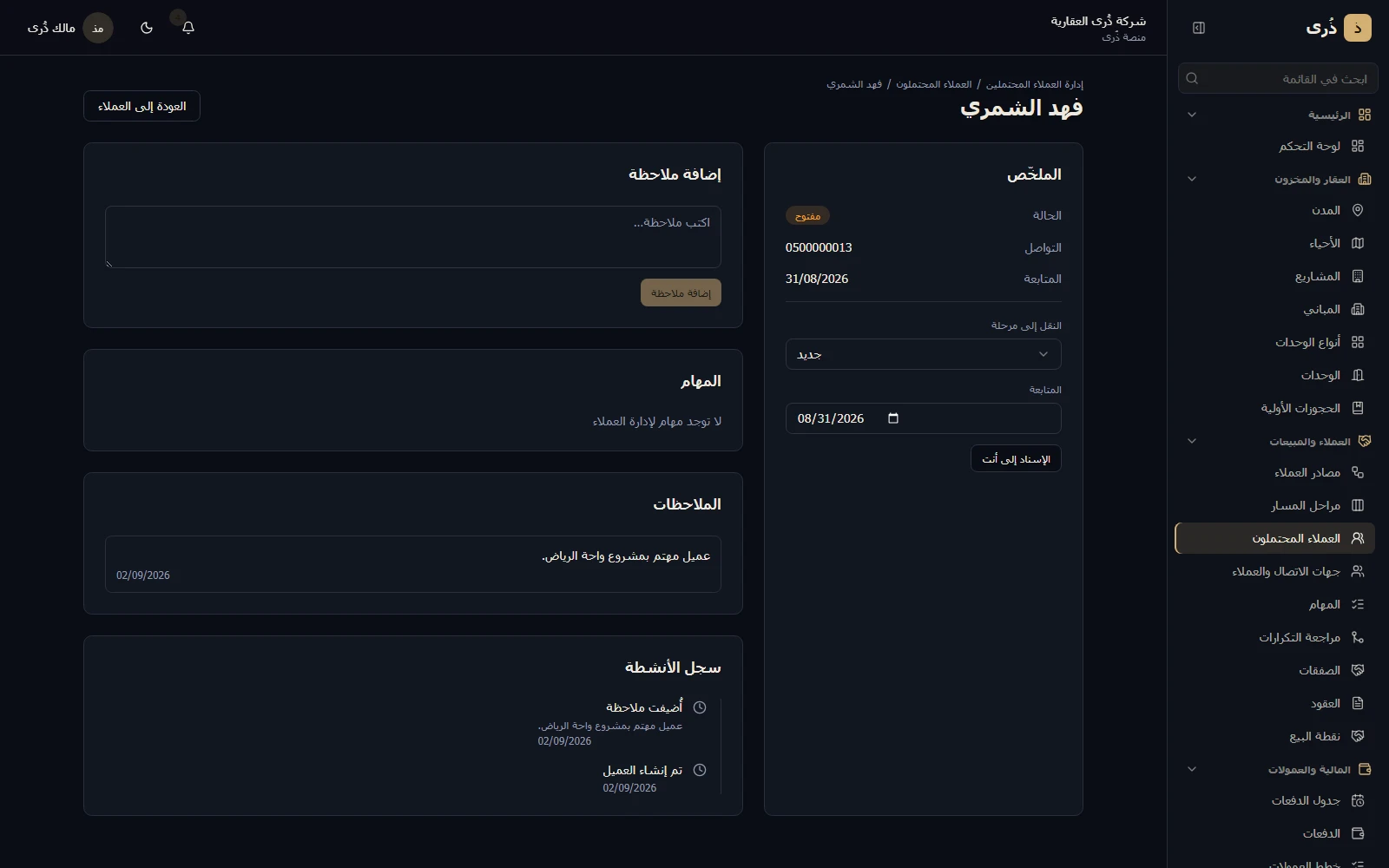
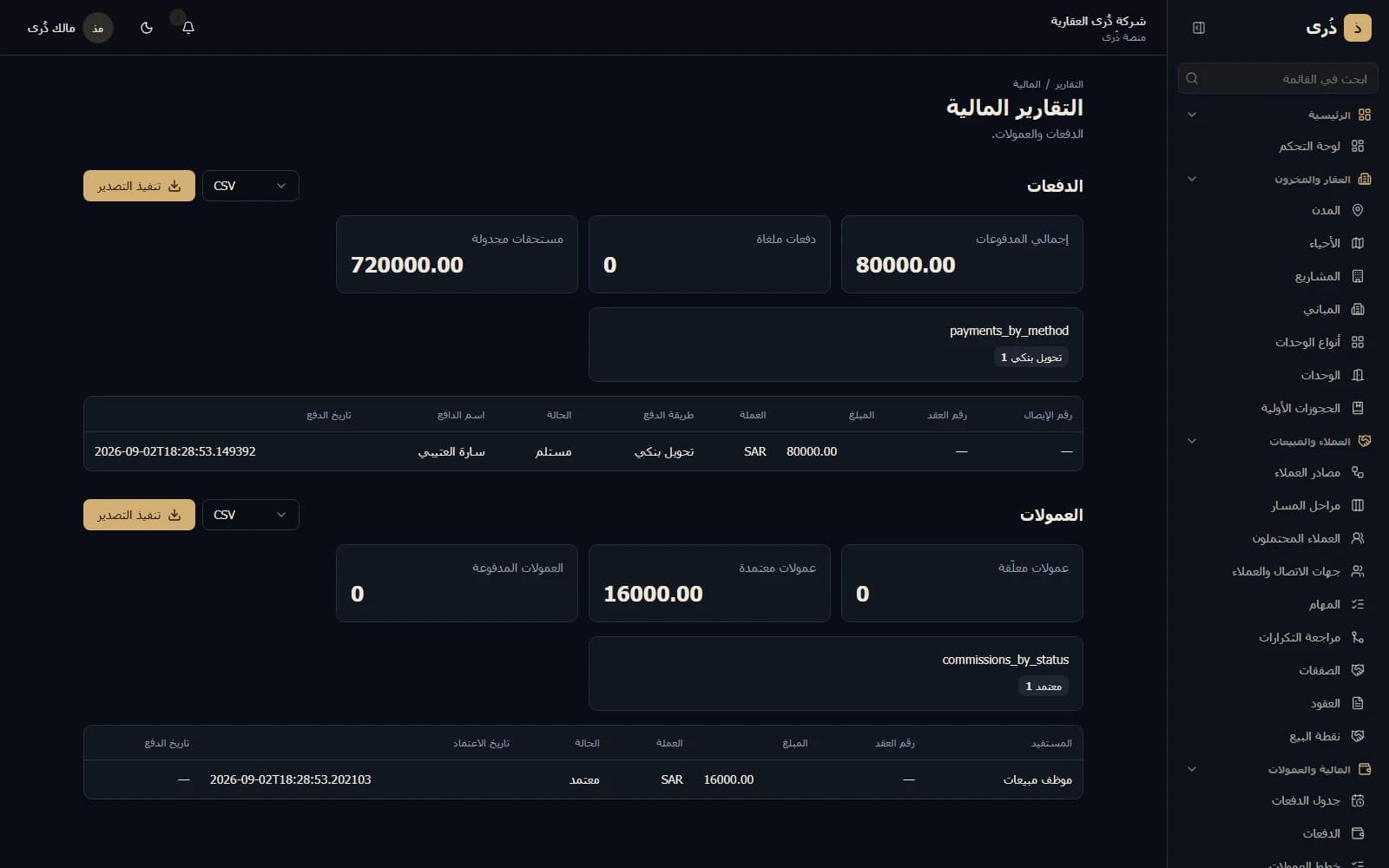
Captured from a project of the V1 release candidate on demo data. Dhura is not deployed to production.




Inside the product
Logged-in screens from a project running on the project's own demo seed. The names, units and amounts are fictional test data, not production figures.
What was verified
- Around thirty backend modules, from tenants and CRM to finance, accounting, portal and AI.
- tenant_id referenced across hundreds of backend files.
- Agent tools restricted to a read-only, tenant-scoped allowlist; actions applied only after approval.
- A provider-neutral AI gateway with schema-validated output.
- Alembic migration history and a Playwright end-to-end suite in the repository.
Executed on 18 Oct 2026 with SQLite and model keys blanked: 644 backend tests passed, none failed. One module (background jobs) could not be collected because the local environment lacks the Redis Python package. The Playwright suite was not rerun.
What I do not claim
- It is not live: it is a V1 release candidate.
- The agents are deterministic, not autonomous.
- No customers, users or business results.
- The README’s test totals are older than the current code and are not repeated here.
Architecture
FastAPI with Pydantic v2, SQLAlchemy 2 and Alembic on PostgreSQL, with Redis for background jobs. A React and TypeScript frontend, Arabic-first and right-to-left, with Playwright end-to-end tests.
Stack
FastAPI · Pydantic v2 · SQLAlchemy 2 · Alembic · PostgreSQL · Redis · React · TypeScript · Playwright
Source
Private repository