Case study · Restaurant operations platform
RestoCafe OS
A multi-branch restaurant platform built around one hard problem: keeping an order correct while tills, a kitchen screen and a patchy connection all touch it.
Engineering project
- Role
- Sole author
- Domain
- Restaurant POS, kitchen and table service
- Shape
- NestJS API, Prisma schema, ops PWA
- Status
- In development, early commit history
The operation
A waiter adds a dish while the cashier splits the bill and the kitchen marks it ready. Every one of them must see the same order, and none of them may overwrite the others.
One order, every state
The order moves through explicit states. Each transition is checked on the server and broadcast to every screen that shows it.
Step 01DRAFT
Draft
Items added at the table or the till.
Step 02CONFIRMED
Confirmed
Sent to the kitchen; the order is now shared.
Step 03IN_PREPARATION
In preparation
The kitchen board picks it up in real time.
Step 04READY
Ready
Marked from the kitchen; the floor is notified.
Step 05SERVED
Served
Closed at the table.
Step 06PAID
Paid
Invoiced and settled, once.
What keeps it correct
- 01
Idempotency keys
A retried request with the same key returns the first result instead of applying twice.
idempotency-key.store.ts
- 02
Optimistic versions
Updates carry the version they were based on; a stale write is rejected, not merged.
expectedVersion
- 03
Row locks for tables
Seating and moving orders between tables runs under SELECT … FOR UPDATE.
FOR UPDATE
- 04
An offline queue
The ops app queues actions while offline and replays them on reconnect, with tests for the queue.
offline-queue.test.ts
- 05
Real-time with auth
Socket.IO with a Redis adapter, and a short-lived socket token instead of the session cookie.
Inside the product
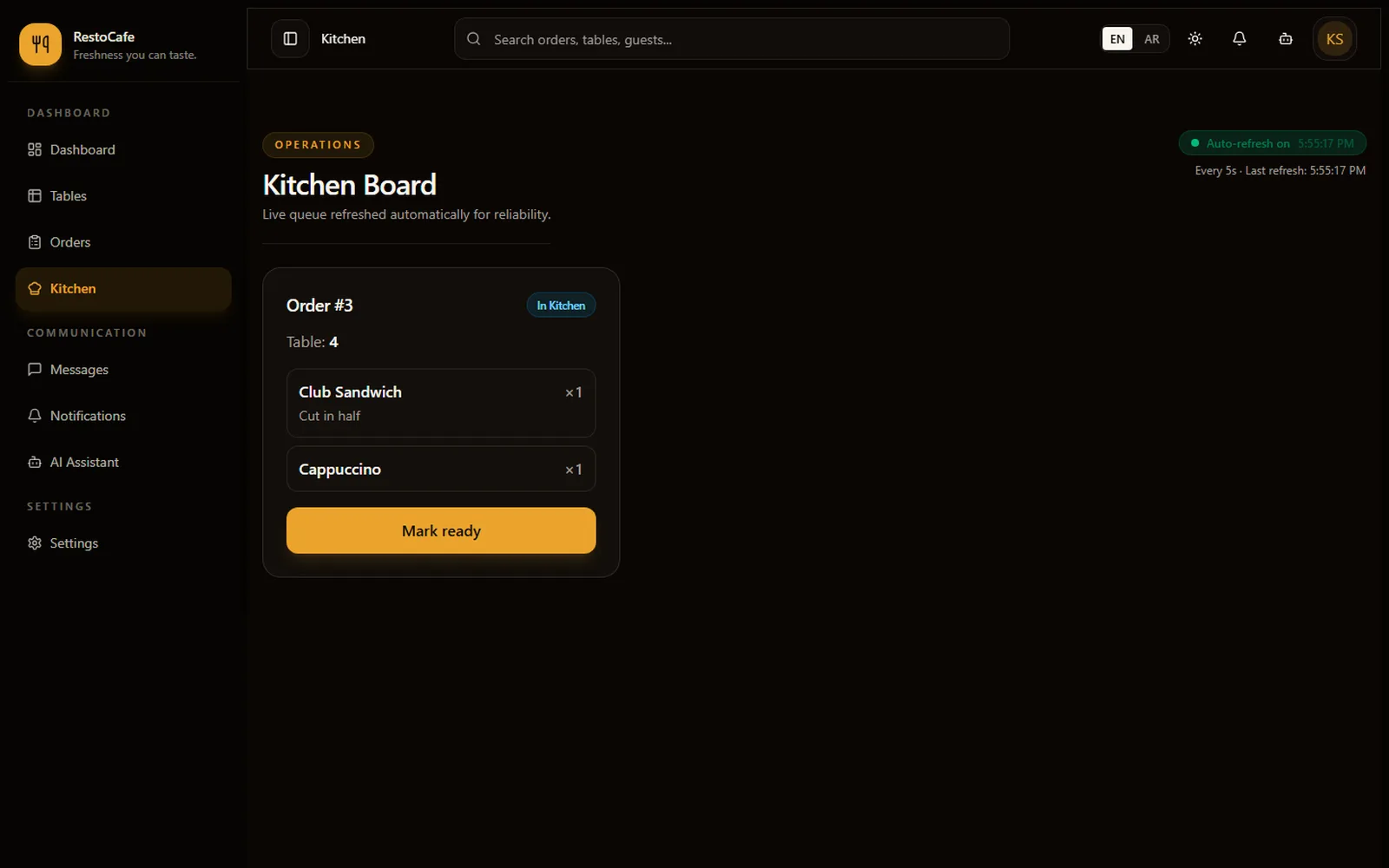
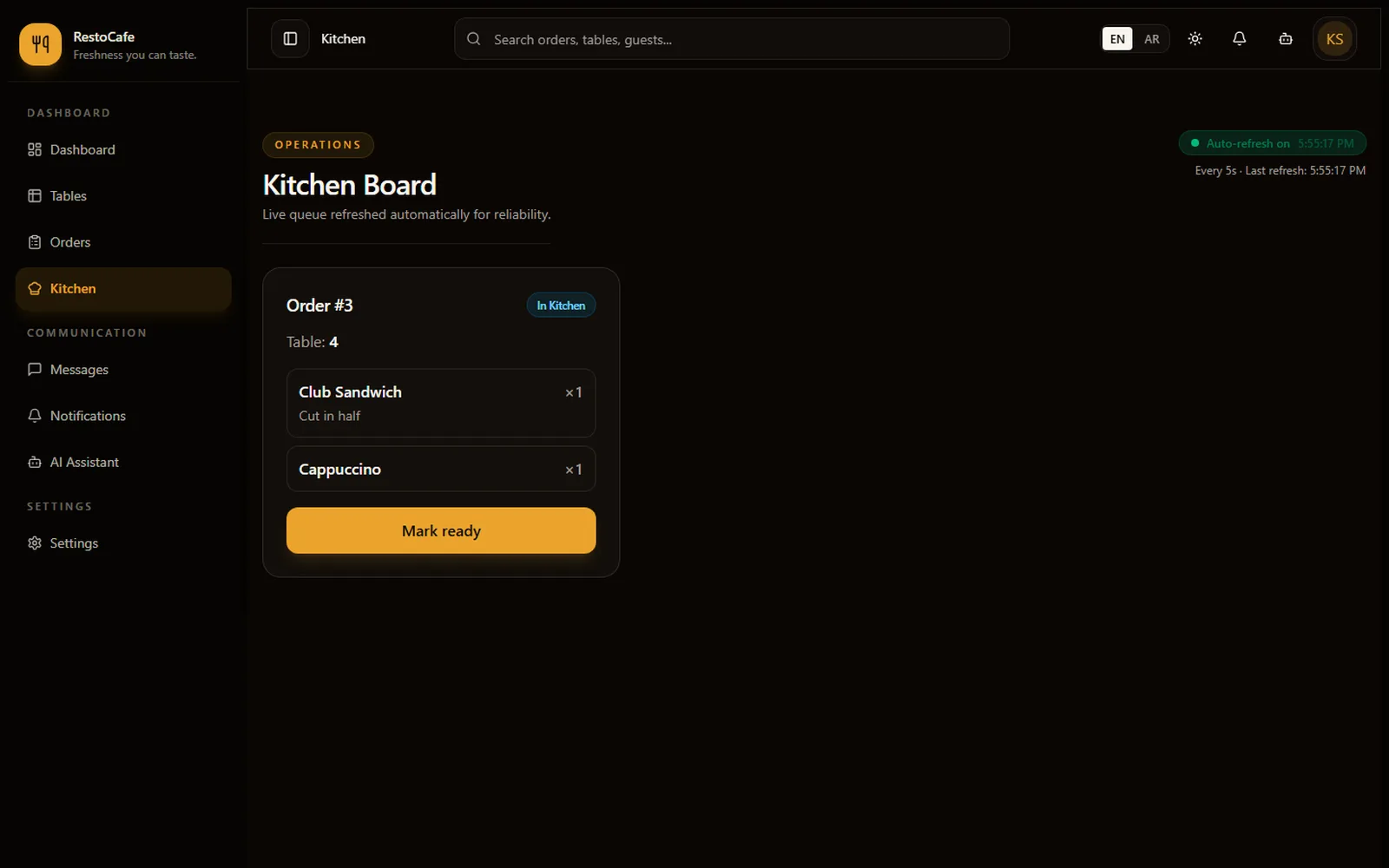
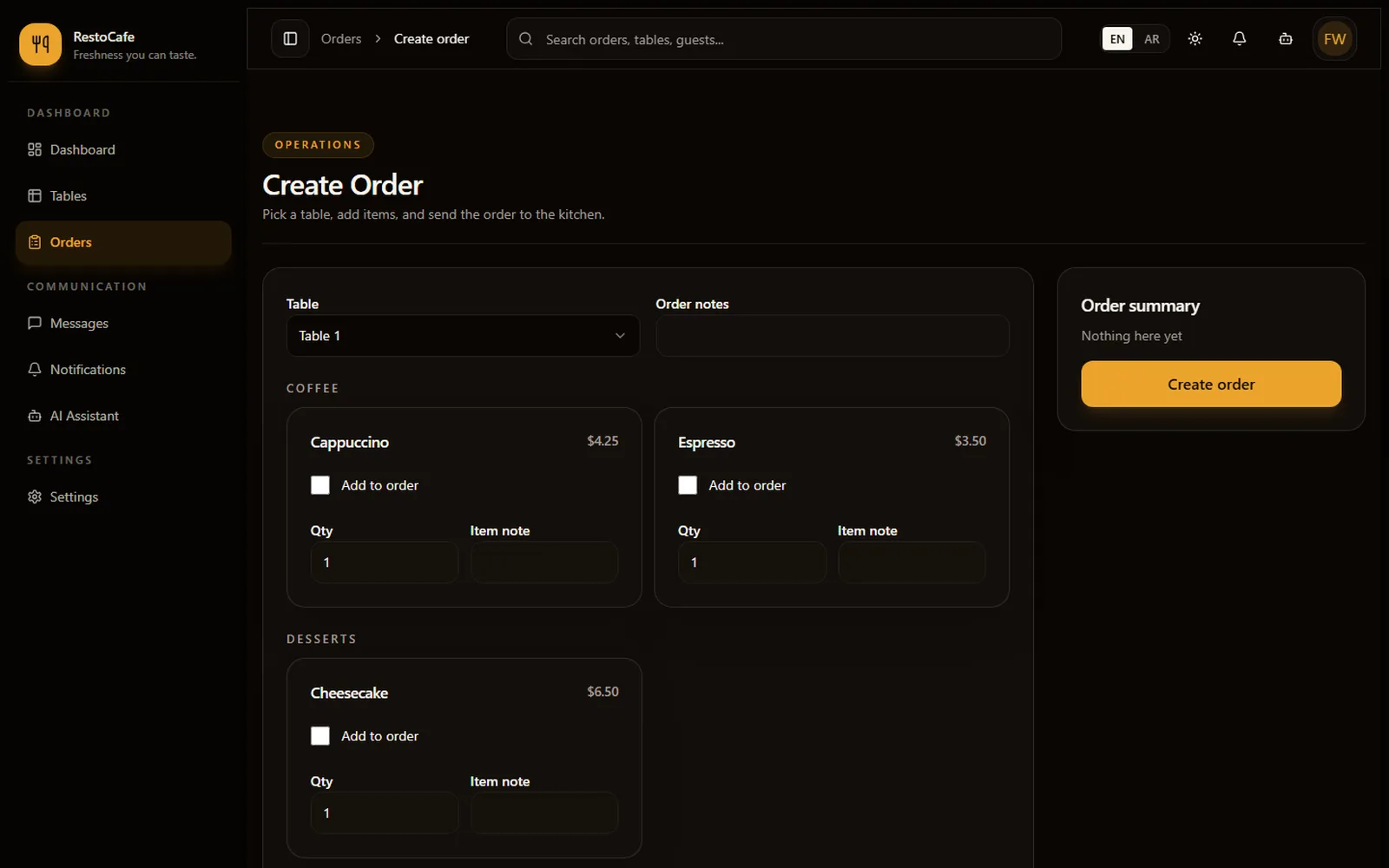
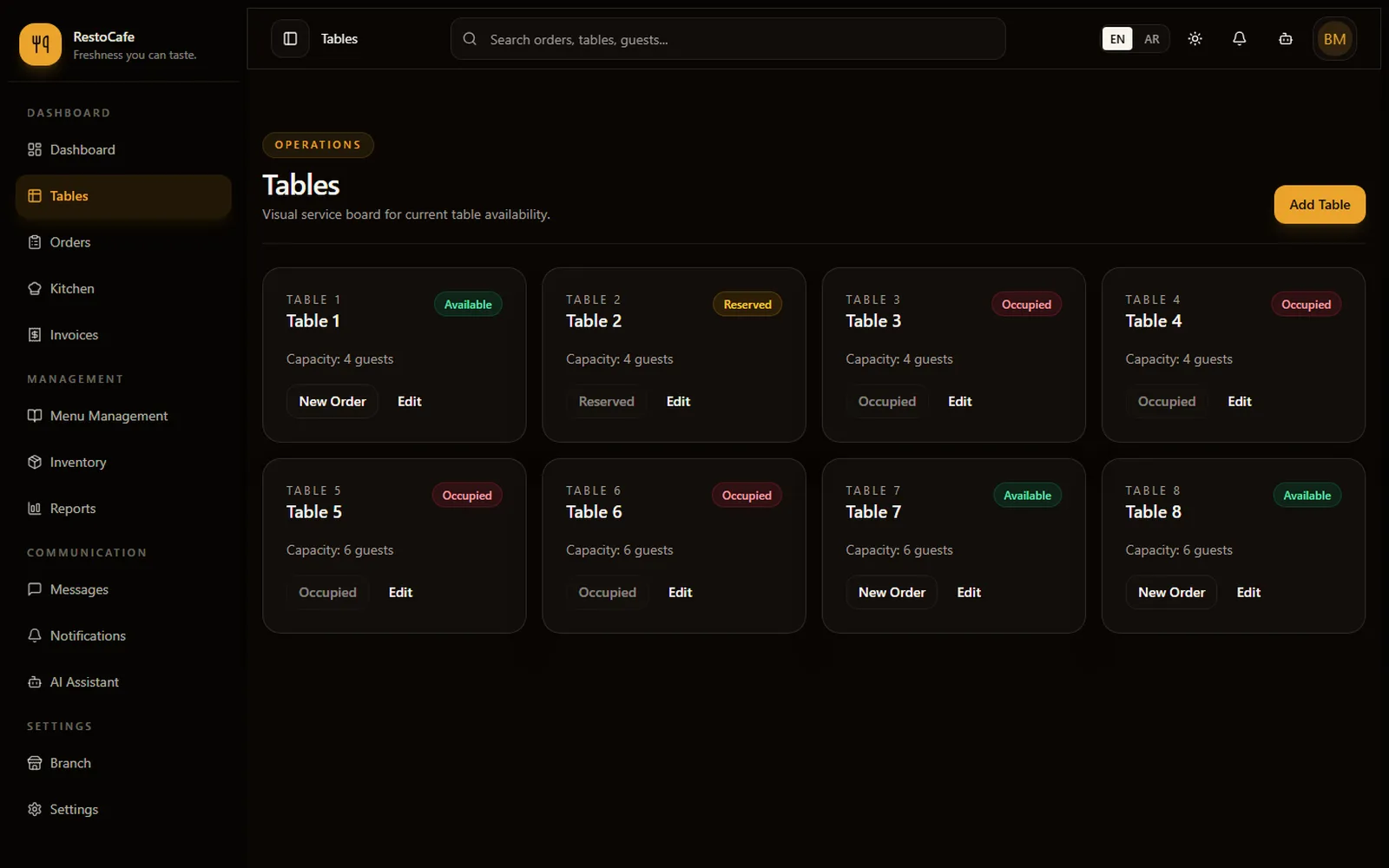
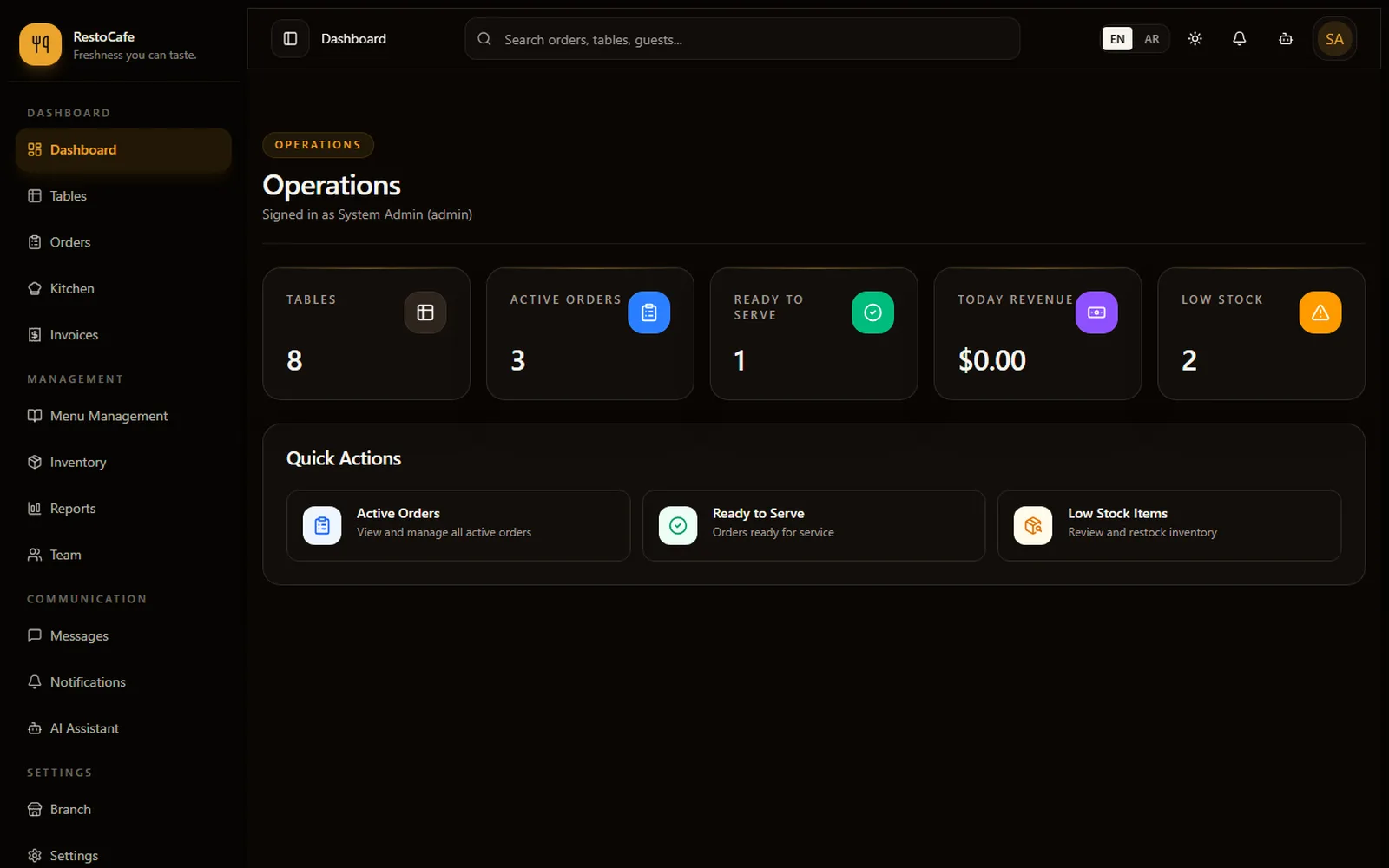
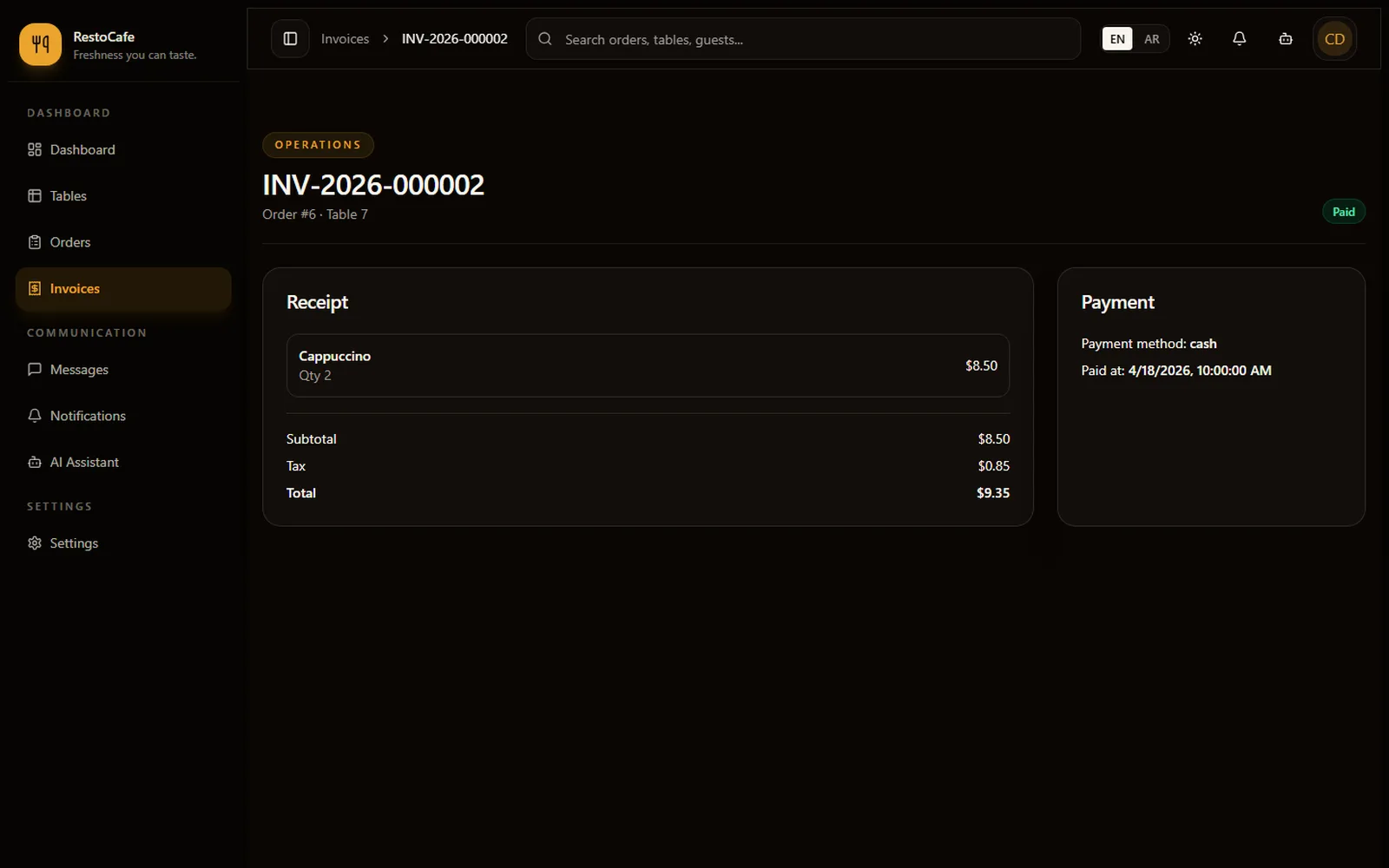
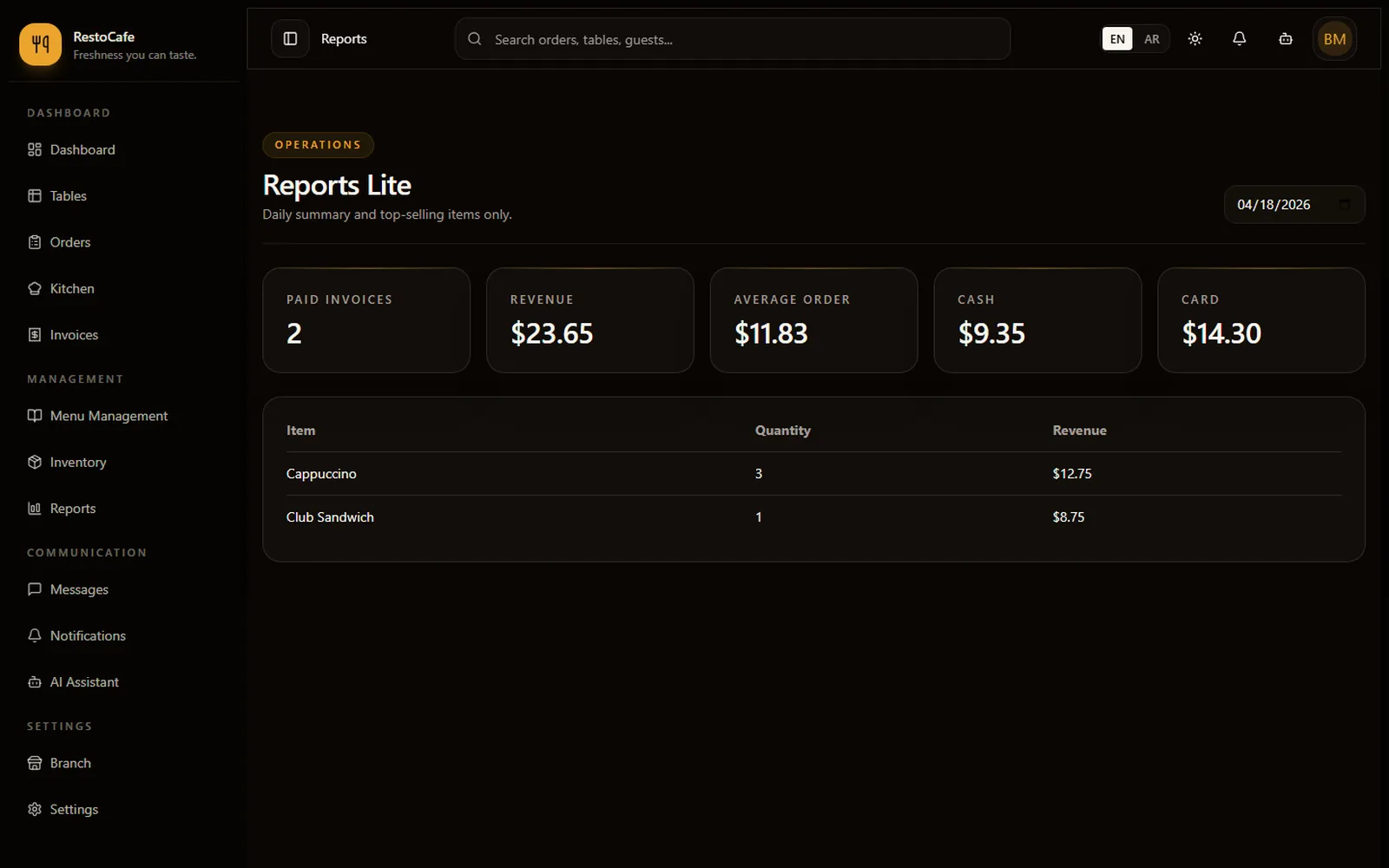
Captured by the repository’s own Playwright visual tests against a seeded project. Orders, tables and amounts are test data.
What was verified
- NestJS, Prisma and PostgreSQL, with a schema of around forty models.
- An idempotency-key store and version checks (expectedVersion) on order updates.
- Row locking in the table service.
- Socket.IO with a Redis adapter and a dedicated socket token.
- An offline queue in the ops web app, with its own tests.
Executed on 18 Oct 2026 against the working tree: 112 passed, 6 failed, 3 skipped (Jest, 2 of 33 suites failing, including the order-lifecycle suite).
What I do not claim
- It is not deployed and has no restaurants using it.
- k6 load scripts and Kubernetes manifests exist, but no load results or production cluster are claimed.
- The history is short: most of the work is still uncommitted.
Architecture
A NestJS and TypeScript API with Prisma on PostgreSQL, Redis for the Socket.IO adapter and caching, and a React PWA for operations with an offline queue.
Stack
NestJS · TypeScript · Prisma · PostgreSQL · Redis · Socket.IO · React · PWA
Source
View source on GitHub